If you are a new clothing brand importing from overseas, let’s pull back the curtain on the garment industry’s best-kept secret: If a factory only checks for quality right before they put the clothes into shipping cartons, you are already in trouble.
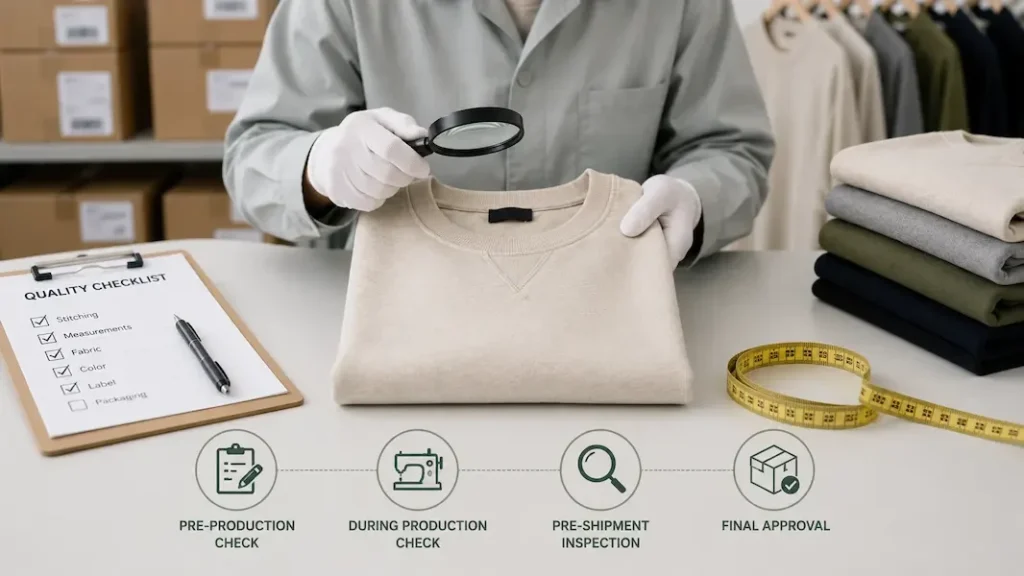
Many novice buyers believe that a garment QC inspection is a final checkpoint—a magical gate where bad products are tossed out and good products are shipped. The brutal reality of apparel quality control is that you cannot “inspect” quality into a garment. Once a waterproof hardshell jacket is sewn with the wrong seam tension, or a hoodie is cut off-grain, the damage is done.
As a manufacturer, we see buyers make the same mistakes year after year. Here is the brutally honest, insider’s guide on how importers should actually manage quality control, and the red flags you need to watch out for.
The Real Story: How Bad Factories Hide Defects
Let’s be honest about what happens in lower-tier facilities. If a factory runs a messy sewing line and produces a high rate of defective garments, they will not simply absorb that financial loss. Instead, they play the “carton game.”
They will pack the perfectly sewn garments at the top and bottom of the boxes and hide the units with puckered seams, loose threads, or slightly misaligned color-blocking in the middle. If you don’t have a strict inspection protocol, you won’t discover these rejects until your own warehouse staff (or worse, your retail customers) open them months later.
To protect your brand and your capital, you must take control of the QC process before production begins.
Rule 1: Define Your AQL Standards Upfront
Never tell a factory, “Please ensure high quality.” That means nothing. You must define your standards mathematically using the AQL (Acceptable Quality Limit).
AQL is the international standard used by professional third-party inspection agencies. Before you sign the Proforma Invoice or pay a deposit, state your exact AQL tolerance in writing.
- For premium sportswear and outerwear, the industry standard is typically AQL 2.5 for Major Defects and AQL 4.0 for Minor Defects.
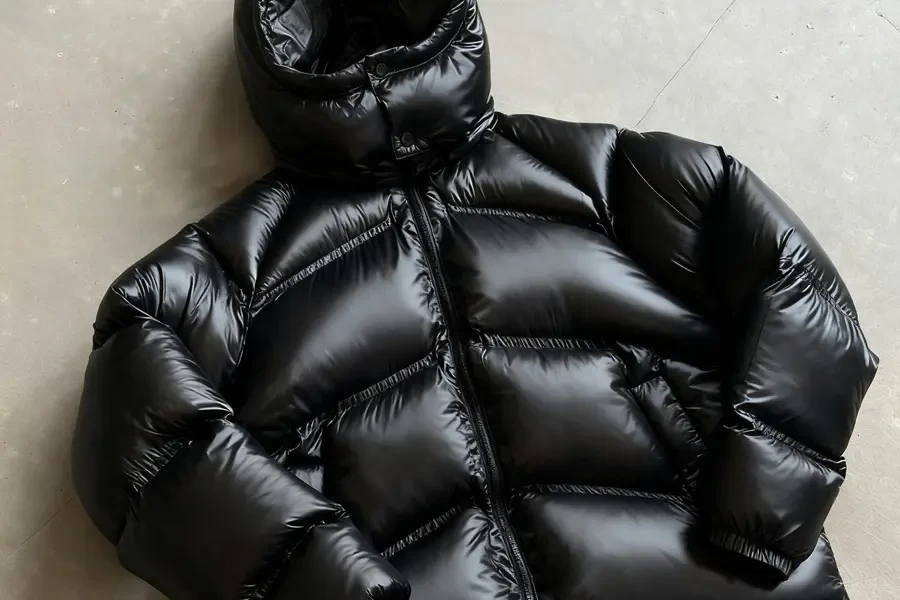
- Major Defect: A broken YKK zipper, an asymmetrical hood, or failing a hydrostatic head waterproof test. (The garment cannot be sold).
- Minor Defect: A single untrimmed thread inside the pocket. (The garment is sellable but not perfect).
If a factory hesitates when you mention AQL 2.5, walk away. It means they lack confidence in their own assembly line.
Rule 2: Demand the “TOP” Sample
Never let a factory sew 3,000 pieces without checking the first one off the line. Demand a TOP (Top of Production) sample.
The TOP is pulled from the very first batch of mass production. It proves that the factory’s cutting machines, sewing operators, and digital CAD files have successfully translated your Pre-Production Sample (PPS) into bulk reality. If the TOP sample has issues, you can stop the line and correct the machine calibration before the other 2,999 pieces are ruined.
Rule 3: “In-Line” Inspection is More Important Than Final Inspection
The most critical apparel quality control happens when the garment is only halfway built. This is called In-Line Inspection.
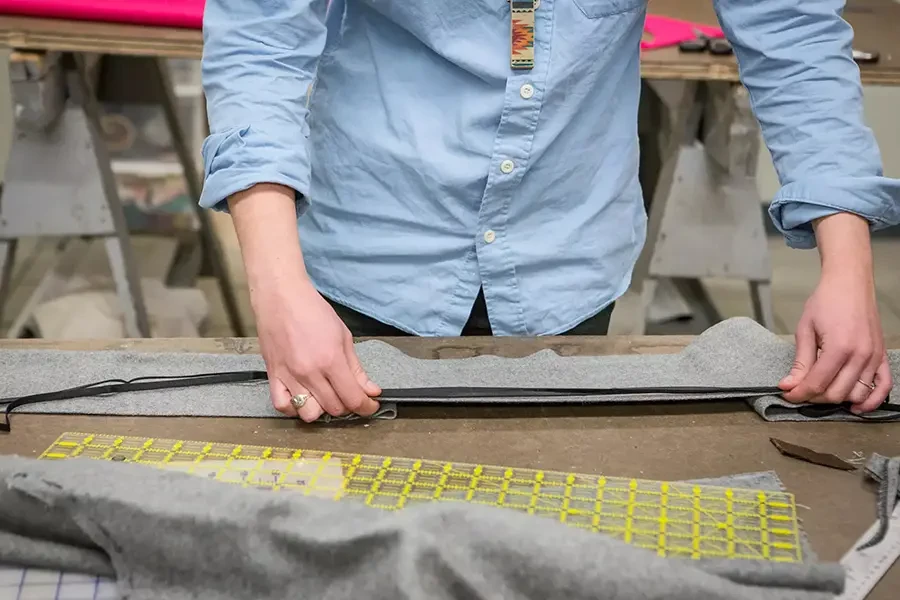
For technical garments, if the PU seam tape on a jacket is applied with the wrong heat setting, it will eventually peel. A final inspection won’t catch this because the tape looks fine on day one. A reliable factory has QC managers walking the sewing floor, pulling half-finished garments, and checking the tension of the flatlock stitching and the heat of the taping machines during assembly.
Rule 4: Welcome Third-Party Inspections
As an importer, you have the right to hire independent inspection companies (like SGS, Intertek, or V-Trust) to visit the factory and perform a final garment QC inspection before the balance payment is made.
A trustworthy manufacturer will not only welcome third-party inspectors but will actively help them set up their testing tables. If a factory makes excuses to prevent external inspectors from entering their facility, consider it a massive red flag.
How Five Oceans Handles Quality
We don’t write this guide to scare you; we write it because we want you to succeed.
At Five Oceans, our entire business model is built on strict, made-to-order B2B manufacturing. We carry absolutely zero standing inventory and do not produce cheap, fast-fashion blanks. Every order we produce is a custom engineering project, which means our quality control has to be flawless.
We build QC into every step of our Pearl River Delta facility—from inspecting incoming fabric rolls to rigorous In-Line checks and strict AQL 2.5 final inspections. We openly invite your third-party inspectors because we know that total transparency is the only way to build a long-term manufacturing partnership.
Don’t leave your brand’s reputation to chance. Contact Five Oceans today to discuss your Tech Pack and learn how we engineer quality into every single stitch.