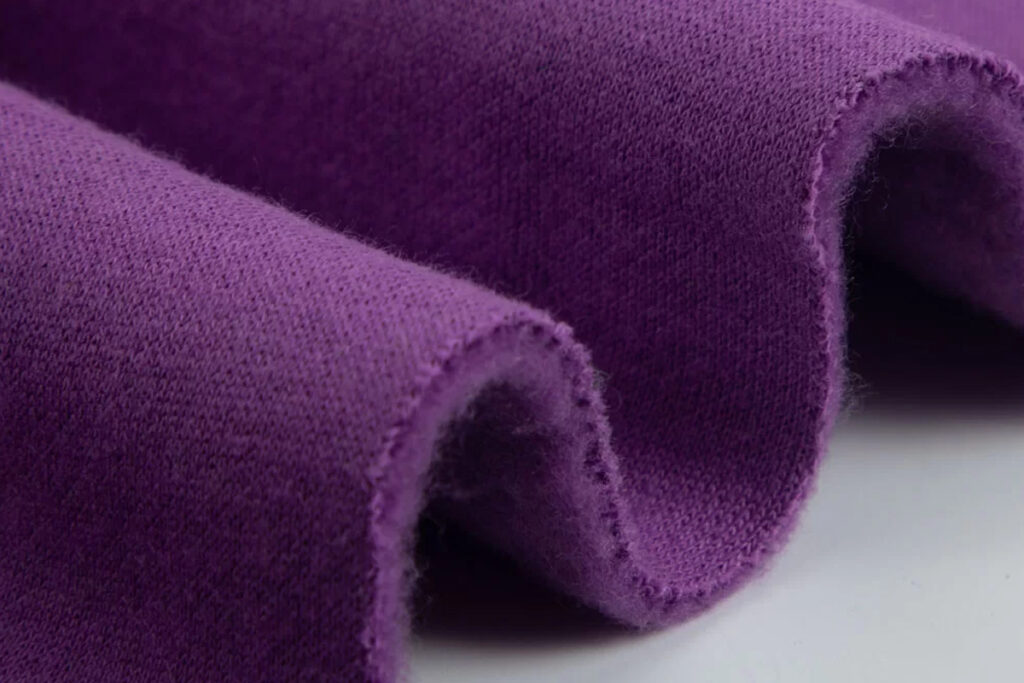
Choosing the right fabric is the single biggest decision in a custom hoodie program. It sets the hand feel, the drape, how the garment wears after washing, and a large part of the unit cost. This guide compares the three fabrics we use most — French terry, brushed fleece and waffle knit — and explains what GSM numbers actually mean for your order.
French terry: the loop-back classic
French terry has a smooth outer face and a looped inner surface. The loops trap a small amount of air without adding bulk, which is why it is the default choice for lightweight hoodies, crewnecks and sweatpants meant to be worn across seasons. It breathes better than brushed fleece and holds its structure well, so oversized and boxy fits keep their shape after repeated wear.
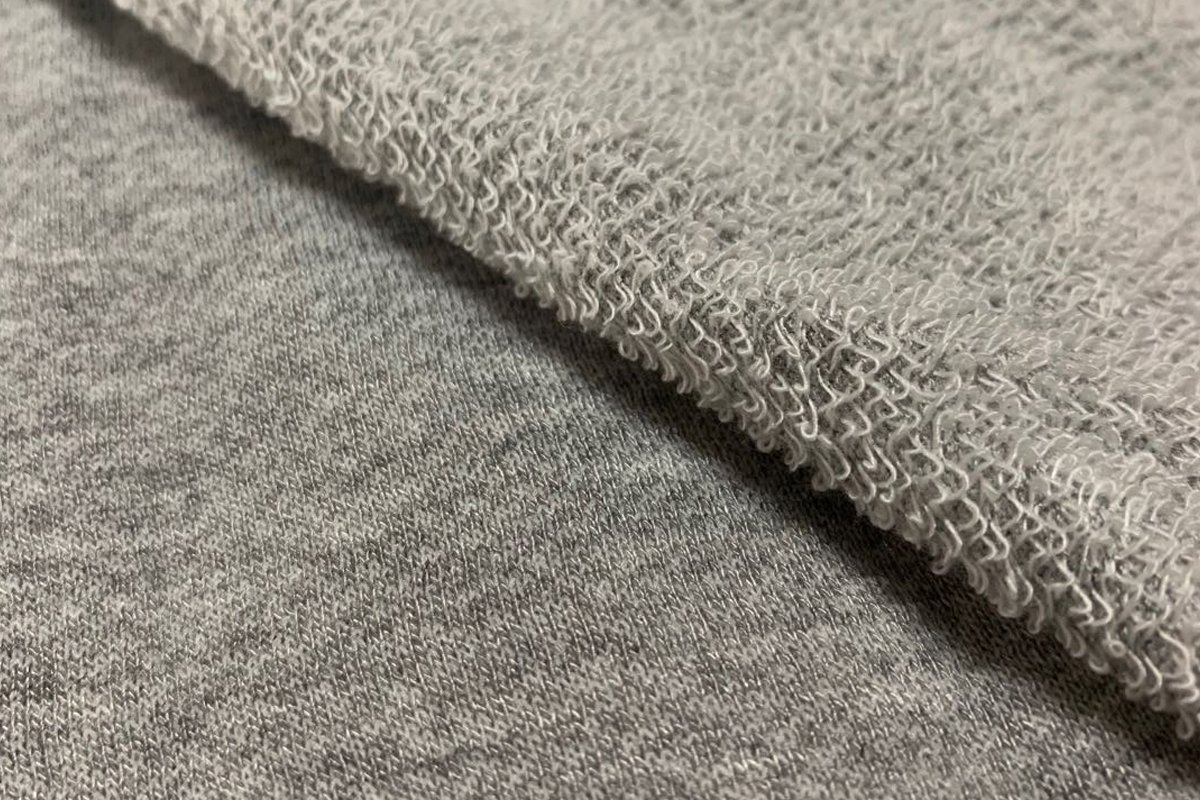
Physical sample photograph: close-up of the looped inner surface of grey French terry.
Brushed fleece: warmer, softer, heavier
Brushed fleece starts from a similar knit, then the inner loops are brushed open into a soft nap. The result is noticeably warmer and softer, with more loft. It is the right pick for winter-weight hoodies and for buyers whose customers put comfort ahead of a crisp, structured silhouette. The trade-off is extra bulk and a higher shipped weight.
Waffle knit and sherpa: texture as design
Waffle knit has a honeycomb surface that adds texture without much weight. It works well when the fabric itself is the design feature, rather than a backdrop for a large print. A recent example is our black waffle knit pullover hoodie with back print.
Sherpa is a plusher, heavier option used mainly in full-zip pieces and quarter-zip pullovers for cold-weather programs, such as this navy sherpa fleece full-zip jacket.
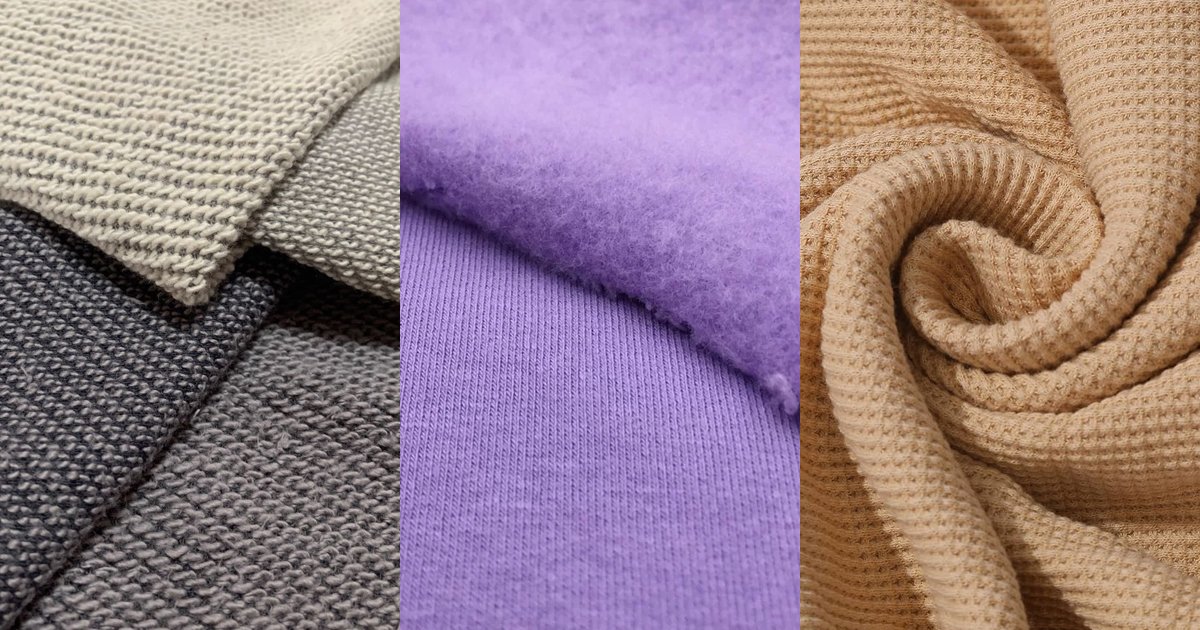
Physical sample photograph: French terry, brushed fleece and waffle knit fabrics laid flat side by side.
What GSM actually tells you
GSM means grams per square metre. It measures fabric weight, not thickness and not quality. A higher GSM usually gives a denser, heavier garment, but two fabrics at the same GSM can feel quite different depending on the yarn and the finishing. Our hoodie fabrics are developed in a 380–450 GSM band, with the exact weight set to each buyer’s specification.
| Fabric | Best for |
|---|---|
| French terry | Year-round hoodies, crewnecks, sweatpants |
| Brushed fleece | Winter hoodies, heavier streetwear |
| Waffle knit | Fashion-led pullovers, layering pieces |
| Sherpa fleece | Full-zip jackets, cold-weather programs |
Across all four fabrics, our standard weight band is 380–450 GSM, specified per project.
Matching fabric to your market
- Warm climates and year-round programs: French terry at the lighter end of our 380–450 GSM band.
- Cold-weather markets: brushed fleece at the heavier end of the band.
- Premium or fashion positioning: waffle knit or sherpa, with the fabric doing the visual work.
- Before committing: we can send fabric swatches for hand-feel review, then develop the sample to your tech pack. See the full sweatshirt and hoodie range.
Sampling and bulk timing
For sweatshirts, crewnecks and sweatpants, sampling is completed within two weeks. Bulk production runs 30 days or more, depending on style complexity and order quantity. Standard MOQ is 300 pieces per style and colour; lower volumes can be discussed.
FAQ
Is a higher GSM always better?
No. Higher GSM means more fabric weight, not automatically better quality. Match the weight to the season and the fit you want.
Can you use fabric we already have?
Yes. Send a swatch or a clear photo and we will source a match or develop the fabric for your program.
Which fabric shrinks the most?
All cotton-rich knits can shrink without proper pre-treatment. Shrinkage control is reviewed at the sampling stage.
Do you offer recycled or organic options?
These can be sourced on request and specified per project.
Can I mix fabrics within one program?
Yes. Many buyers run a French terry crewneck alongside a fleece hoodie in the same colour story.
Ready to source?
Send your tech pack, reference sample or product photo to our team. We will come back with fabric options, GSM recommendations and a sampling plan.