In 2026, sustainability in the apparel industry is no longer just a marketing buzzword—it is a baseline requirement for premium brands. As consumers become more educated about the environmental impact of their garments, they expect transparency, ethical production, and certified materials.
However, navigating the world of eco-friendly production can be confusing. “Greenwashing” is common, which is why partnering with a truly sustainable clothing manufacturer requires understanding the global certifications that guarantee environmental compliance.
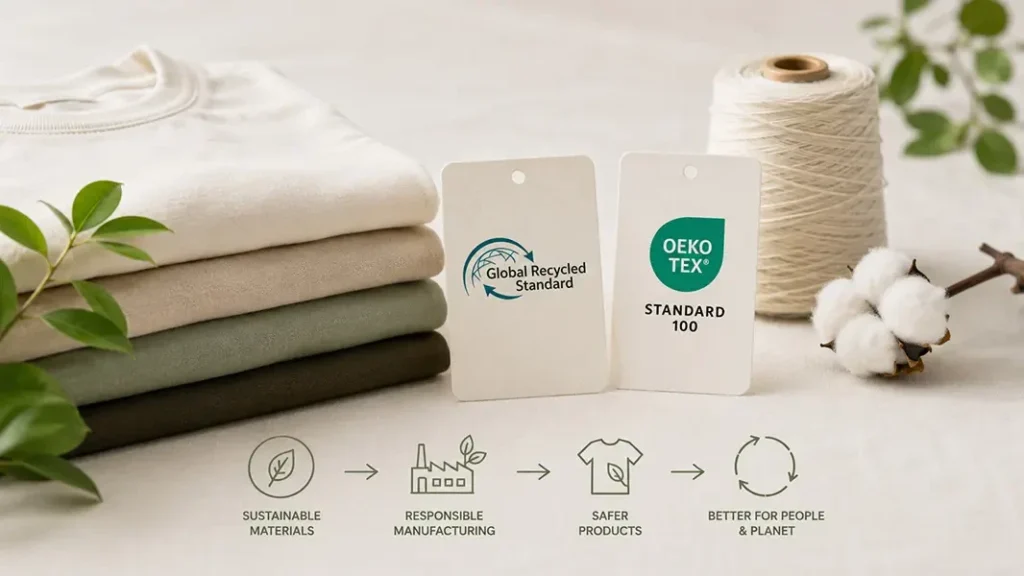
If you are developing custom sportswear or technical outerwear, the two most critical standards you need to know are GRS and OEKO-TEX. Here is a breakdown of what they mean and why they matter for your next production run.
What is the Global Recycled Standard (GRS)?
When producing technical apparel like hardshell jackets or activewear, synthetic materials like polyester and nylon are often required for performance. To make these garments sustainable, brands turn to recycled synthetics (such as fabrics made from post-consumer PET bottles).
The Global Recycled Standard (GRS) is the ultimate international certification that verifies the recycled content of a product.
- Traceability: A GRS certified factory and supply chain ensures that the recycled material can be tracked from the recycling facility all the way to the final garment.
- Social & Environmental Practices: GRS goes beyond just the materials. It also audits the factory’s environmental practices (like wastewater management) and social responsibility (fair labor conditions and safe working environments).
Why it matters for your brand: Without GRS certification, there is no verifiable way to prove to your customers that the “recycled polyester” in your hoodies is genuinely recycled.
What is OEKO-TEX® Standard 100?
While GRS focuses on the origin of recycled materials, OEKO-TEX focuses on human safety and chemical management.
During the manufacturing of technical clothing, fabrics undergo dyeing, finishing, and the application of performance coatings (like DWR for waterproofing). OEKO-TEX Standard 100 is a globally standardized, independent testing certification system for raw, semi-finished, and finished textile products.
- Free from Harmful Substances: If a fabric or garment carries the OEKO-TEX label, it means every component—from the outer shell fabric down to the sewing threads, custom zippers, and inner linings—has been rigorously tested for toxic chemicals (such as heavy metals, harmful azo dyes, and formaldehyde).
- Next-to-Skin Safety: This is especially critical for sportswear and base layers that are in direct, prolonged contact with the skin during intense physical activity.
GRS vs. OEKO-TEX: A Quick Comparison
| Feature | GRS (Global Recycled Standard) | OEKO-TEX Standard 100 |
| Primary Focus | Verifying recycled content & ethical production | Chemical safety and testing for harmful substances |
| Application | Recycled materials (e.g., Recycled Polyester/Nylon) | All textile components (Fabrics, threads, trims, zippers) |
| Consumer Benefit | Environmental impact reduction, transparent sourcing | Health, safety, and non-toxic guarantees |
Quality as the Ultimate Sustainability
It is important to remember that true sustainability is not just about using certified fabrics; it is about the manufacturing model itself.
The most environmentally damaging practice in the fashion industry is the mass overproduction of low-quality, generic “blank” garments that end up in landfills. At Five Oceans, we reject this model entirely. We operate strictly as a high-end, made-to-order OEM facility. We hold zero standing inventory and do not participate in fast-fashion private labeling.
By engineering complex, highly durable garments from scratch, we ensure that the clothing we manufacture lasts for years, not just a single season.
When you partner with us, our technical sourcing team can seamlessly integrate GRS-certified recycled fabrics and OEKO-TEX-certified trims into your Tech Pack. We connect you with a verified, clean supply chain without compromising the technical performance of your designs.
Ready to build a high-performance, sustainable collection? Contact our technical team today to discuss your Tech Pack and explore our certified material sourcing options.