Embroidery is the most common way to brand a hoodie, but “embroidery” covers at least six distinct techniques with very different looks, costs and lead times. Choosing the wrong one is a frequent cause of samples that miss the mark. This guide compares the methods we use most — flat, 3D puff, chain stitch, chenille, toothbrush and applique — and explains where each one earns its cost.
Flat embroidery: the default for logos and small marks
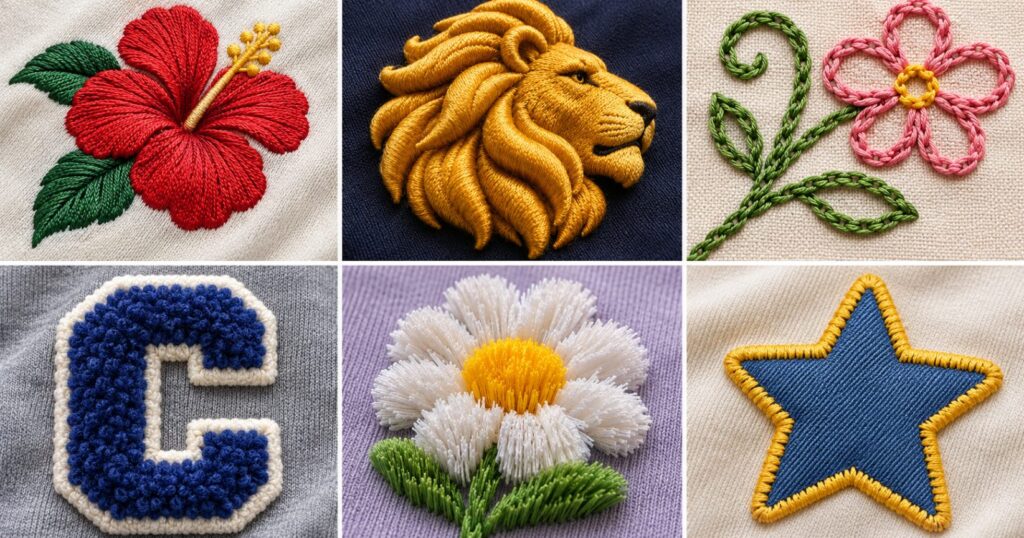
Flat embroidery stitches directly onto the fabric with a standard satin or fill stitch. It sits almost level with the surface, reproduces fine detail well and works on almost every hoodie fabric. It is the most economical option and the right starting point for chest logos, wordmarks and small graphics. A recent example is the script embroidery on this black waffle knit pullover hoodie with back print.
3D puff embroidery: raised, bold and best kept simple
3D puff embroidery places a foam layer under the stitches so the lettering stands proud of the fabric. The effect is tactile and premium, and it reads well at distance — which is why it is common on streetwear caps and hoodie chests. Foam does not like fine detail or sharp inner corners, so bold block letters and simple shapes hold up best. It costs more than flat embroidery because of the extra material and the slower, more careful stitching.
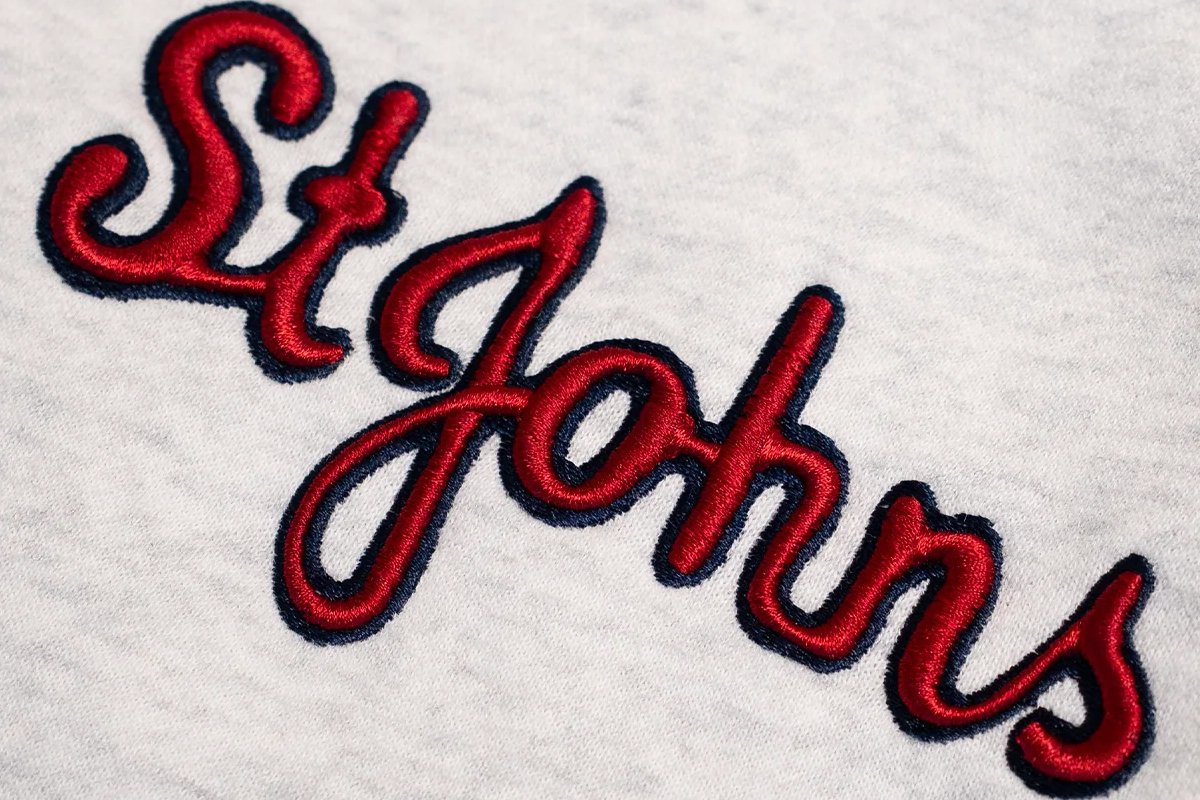
Physical sample photograph: close-up of raised 3D puff embroidery lettering on a hoodie.
Chain stitch: a vintage, hand-drawn line
Chain stitch forms each stitch as a loop, producing a rope-like line with visible texture. It has a vintage, hand-worked look that flat embroidery cannot imitate, and it suits script lettering and simple outlined motifs. It is slower to run than flat fill, so it tends to appear on smaller marks rather than large coverage areas.
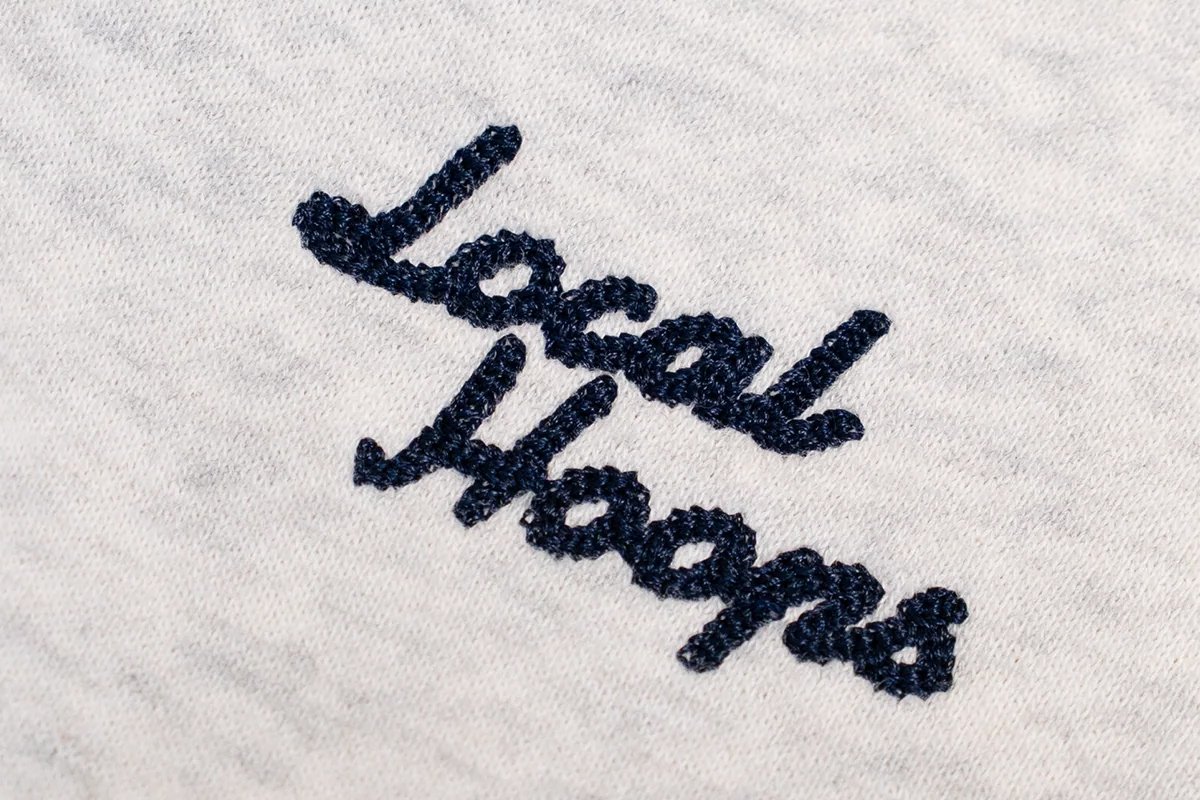
Physical sample photograph: close-up of chain stitch embroidery lettering on fabric.
Chenille embroidery: soft, plush lettering
Chenille uses a looped yarn that is cut or left looped to create a fuzzy, velvet-like surface. It is the classic varsity and collegiate look — thick, soft letters with strong colour. Chenille needs a sturdy base fabric and larger letterforms; tiny detail will not hold. For patches rather than direct embroidery, the same look is produced as a chenille patch, which is sewn or heat-applied to the garment.
Toothbrush embroidery: maximum texture
Toothbrush embroidery (also called 3D toothbrush embroidery) packs dense upright threads that stand up like bristles. It gives a fuzzy, three-dimensional surface with strong visual and tactile impact, and is used for statement logos and novelty graphics. It is the heaviest and most specialised of the techniques here, with a higher unit cost and a heavier finished patch.
Applique: fabric layered onto fabric
Applique places a separate piece of fabric on the garment and secures the edge with embroidery. It allows a large, bold shape with much less stitching time than filling the same area with thread, and it opens up fabric contrasts — twill, felt or a second colour. Tackle twill applique is a staple of varsity and streetwear programs. See this heather grey crewneck with arched tackle twill applique for the finish.
Comparing the six methods
| Method | Look | Best for | Relative cost |
|---|---|---|---|
| Flat embroidery | Level, detailed | Chest logos, wordmarks | Low |
| 3D puff | Raised, bold | Block lettering, simple shapes | Medium |
| Chain stitch | Rope-like, vintage | Script, outlined motifs | Medium |
| Chenille | Soft, plush | Varsity letters, patches | Medium to high |
| Toothbrush | Dense, fuzzy 3D | Statement logos | High |
| Applique | Layered fabric | Large bold shapes, contrasts | Medium |
Costs are relative to flat embroidery on the same garment and shift with artwork size, stitch count and order quantity. Full decoration details are covered on our sweatshirt and hoodie range.
Sampling, MOQ and lead times
For sweatshirts, crewnecks and sweatpants, sampling is completed within two weeks and bulk production runs 30 days or more, depending on style complexity and order quantity. Standard MOQ is 300 pieces per style and colour; lower volumes can be discussed. We can produce small stitched samples of each technique so you can compare the hand feel before committing.
FAQ
Which embroidery method is most durable?
Flat embroidery and applique generally withstand washing and wear best. Raised and textured effects add dimension but also more surface that can catch and compress over time.
Can I combine more than one technique in a single order?
Yes. Many programs pair a flat chest logo with a puff or applique back graphic. Cost is calculated per decoration, not per garment.
Do you need vector artwork?
Vector files give the cleanest stitch paths, but a clear high-resolution image can often be converted. We confirm the stitch layout at the sample stage.
Is there a minimum stitch count?
No fixed minimum. Very small marks are usually priced at a flat setup plus per-piece rate; larger coverage is priced by stitch count.
Can you match the embroidery on a sample I already have?
Yes. Send the sample or a clear photo and we will match the technique, thread colour and density as closely as the method allows.
Ready to source?
Send your artwork, reference sample or product photo to our team. We will recommend the right embroidery method, prepare a stitched sample and quote the decoration per your order quantity.