
Two hoodies can look identical in a product photo and feel completely different in the hand. The difference is in the construction details — the ribbing at the cuff, the zipper, the drawcord, the hood and the stitching that holds it all together. This guide walks through the details that separate a well-built hoodie from a cheap one, and what to specify when you order custom.
Why construction details matter
Details are where a garment earns its price. A hoodie that holds its shape after washing, whose zipper runs smoothly and whose cuffs do not splay has been specified carefully at every step. For a brand, these are the details customers notice over time, and they drive repeat purchases and reviews. They are also the easiest things to overlook on a spec sheet until a sample arrives.
Ribbed cuffs and hem
Ribbing is the stretchy knit at the wrist and waist that seals the garment and holds its shape. A good rib has enough recovery to spring back after stretching and is sewn evenly all the way around. Thin or loosely knitted rib loses tension and bags out. Specify the rib construction and the stitch used to attach it — a clean, even join is a visible quality signal, especially on a heavier hoodie.
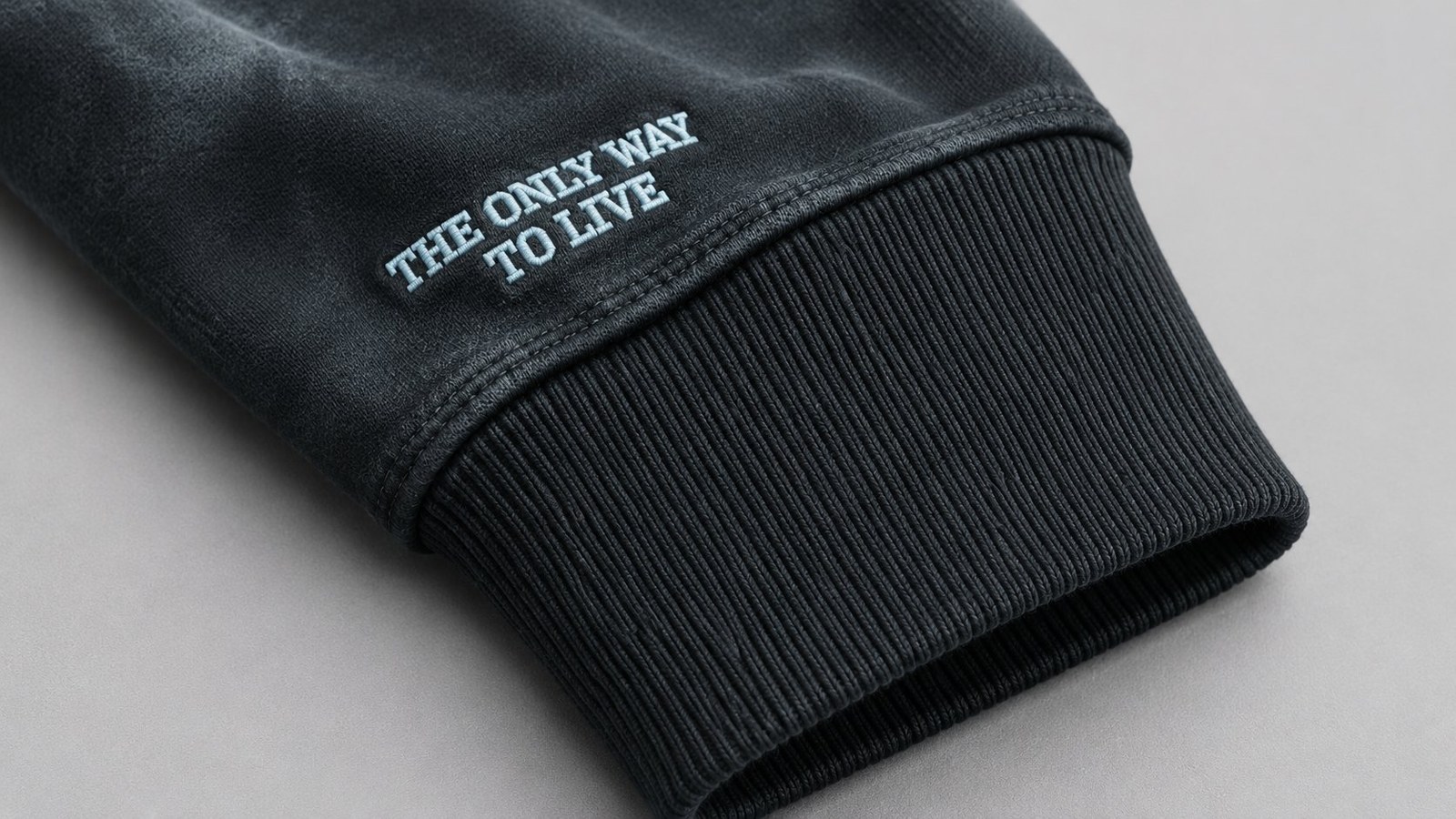
AI-generated illustrative imagery, not an actual photograph. Close-up of a ribbed cuff on a dark sweatshirt with a small embroidered mark above the ribbing.
Zippers and hardware
On a full-zip hoodie, the zipper is the most-used component and the most likely to fail. A metal tooth zipper with a solid slider feels substantial and lasts; a lightweight coil zipper is fine for a mid-weight style but wears faster under heavy use. Check that the tape matches the garment colour, the teeth align and the slider has a stop that will not catch fabric. The sweatshirt and hoodie range shows both pullover and full-zip options.
Drawcords and waistband
Drawcords set the fit at the hood and waist, and they are a frequent branding point. Flat woven cords, round cords and ribbon cords each give a different look; the ends can be left raw, tipped with metal or heat-sealed. On sweatpants, the elasticated waistband and the way the cord is channeled through it determine comfort and durability. A cord that twists or frays at the eyelet is a sign of a shortcut in construction.
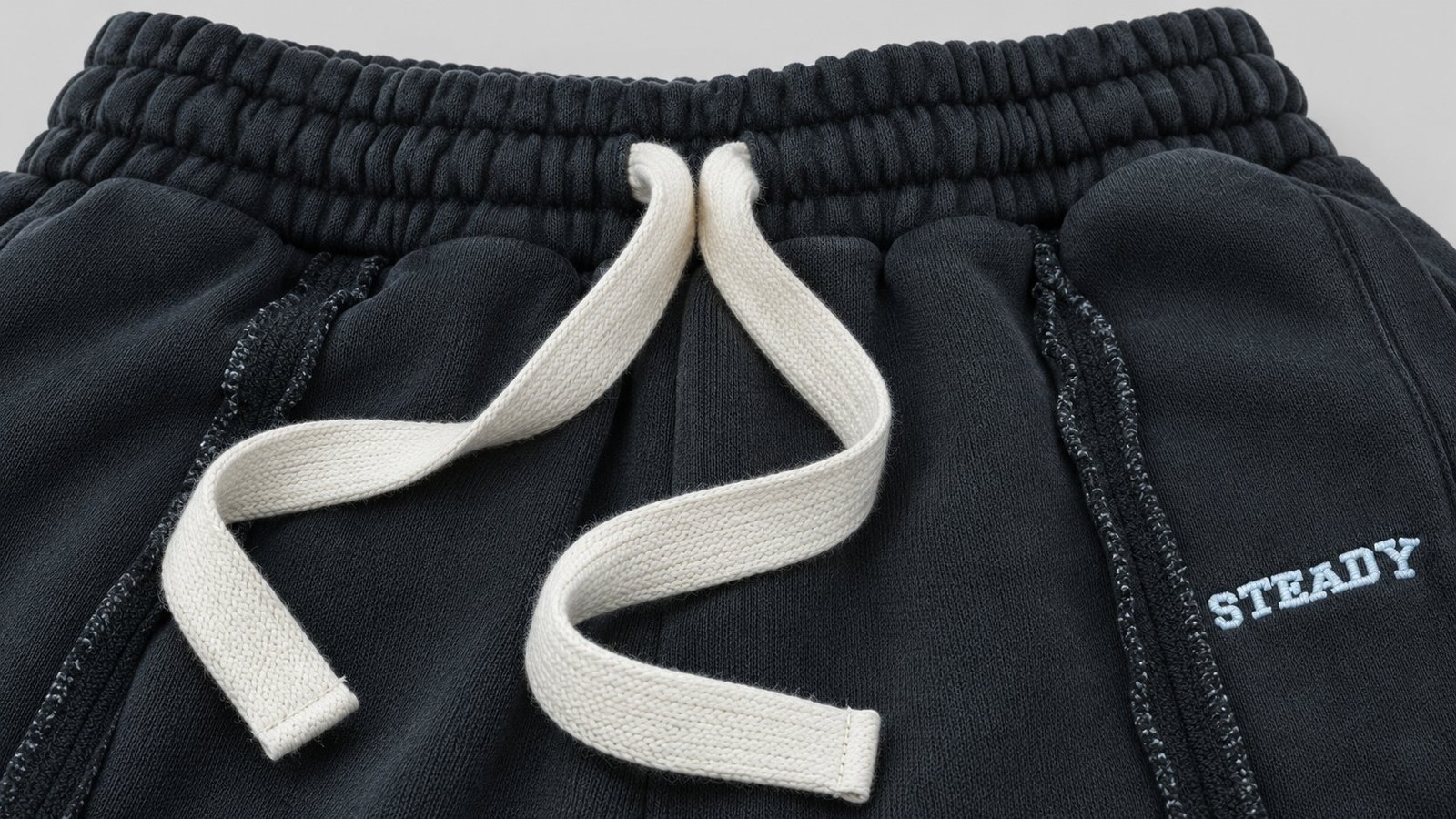
AI-generated illustrative imagery, not an actual photograph. Close-up of a flat drawcord at the elasticated waistband of dark sweatpants.
The hood
A well-built hood has enough panels to hold a rounded shape around the head, a double layer at the crown, and clean topstitching along the edge. A single-panel hood is cheaper but tends to fold and sit flat. Check the hood on a physical sample: pull it up, look at the seam from inside, and confirm the drawcord exits cleanly. Small embroidered marks on the crown are common — see our embroidery guide for placement options.
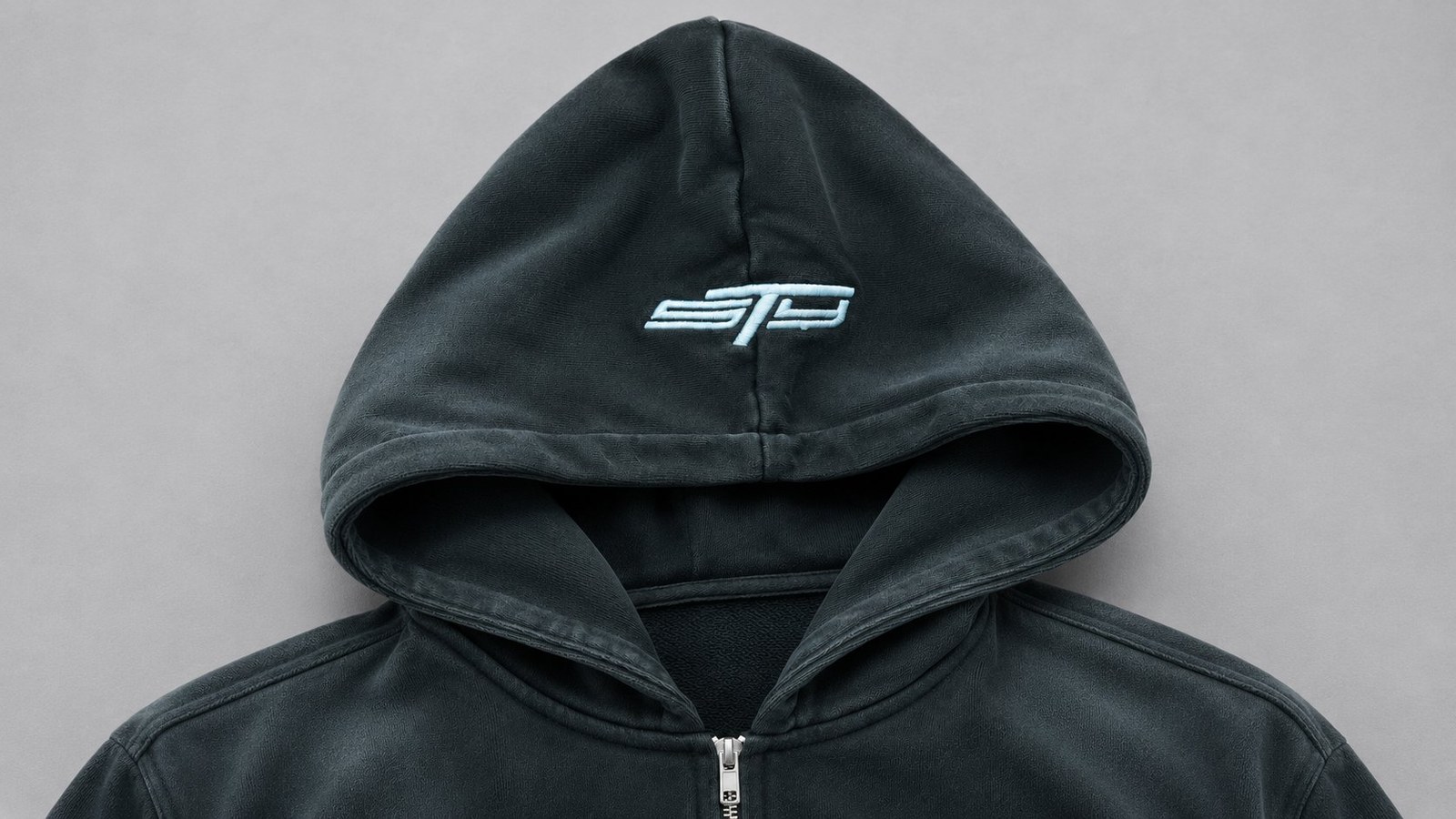
AI-generated illustrative imagery, not an actual photograph. Close-up of the hood of a dark zip-up hoodie with a small embroidered mark on the crown.
Stitching and seams
Even, straight topstitching is one of the clearest signs of care. Look for consistent stitch length, no loose threads and seams that lie flat. Double-needle stitching at high-stress areas such as the armhole and pocket opening adds strength. These details cost little in material but add handling time, which is why they are the first thing to go on a cheaply made garment.
Details side by side
| Detail | Quality sign | Shortcut sign |
|---|---|---|
| Ribbing | Tight knit, good recovery | Loose rib, bags out |
| Zipper | Solid slider, aligned teeth | Catches, mismatched tape |
| Drawcord | Even cord, clean eyelet | Twists, frayed ends |
| Hood | Multi-panel, double layer | Flat, folds in on itself |
Fabric still sets the foundation
Construction details can only do so much if the base fabric is wrong. Our hoodie fabrics are developed in a 380-450 GSM band, specified per project — heavy enough to support structure and hold the shape the details create. The fabric guide explains the knits we work with.
Specifying details in your order
Put the details in writing before sampling: rib type, zipper style and colour, cord type and end finish, hood construction and stitching notes. Approve a physical sample that shows every one of them. For sweatshirts and crewnecks, sampling is completed within two weeks and bulk production runs 30 days or more, depending on style complexity and quantity. Standard MOQ is 300 pieces per style and colour; lower volumes can be discussed. Full details are on our MOQ and sampling page.
FAQ
Which detail most affects durability?
The zipper on a full-zip style and the ribbing at cuffs and hem. Both are high-use areas, and quality components there extend the life of the garment.
Can I customise the drawcord and zipper?
Yes. Cord type, colour and end finish, plus zipper tooth, slider and tape colour, can be specified to match your brand.
Does a better hood cost much more?
A multi-panel, double-layer hood adds material and handling, but the difference is modest at MOQ and visible in wear.
Can you build these details from a reference sample?
Yes. Send a sample or photos with notes and we will match the construction — see our services.
Ready to source?
Tell us which details matter to your brand and your target quantity to our team. We will spec the components, prepare a sample and quote the program.