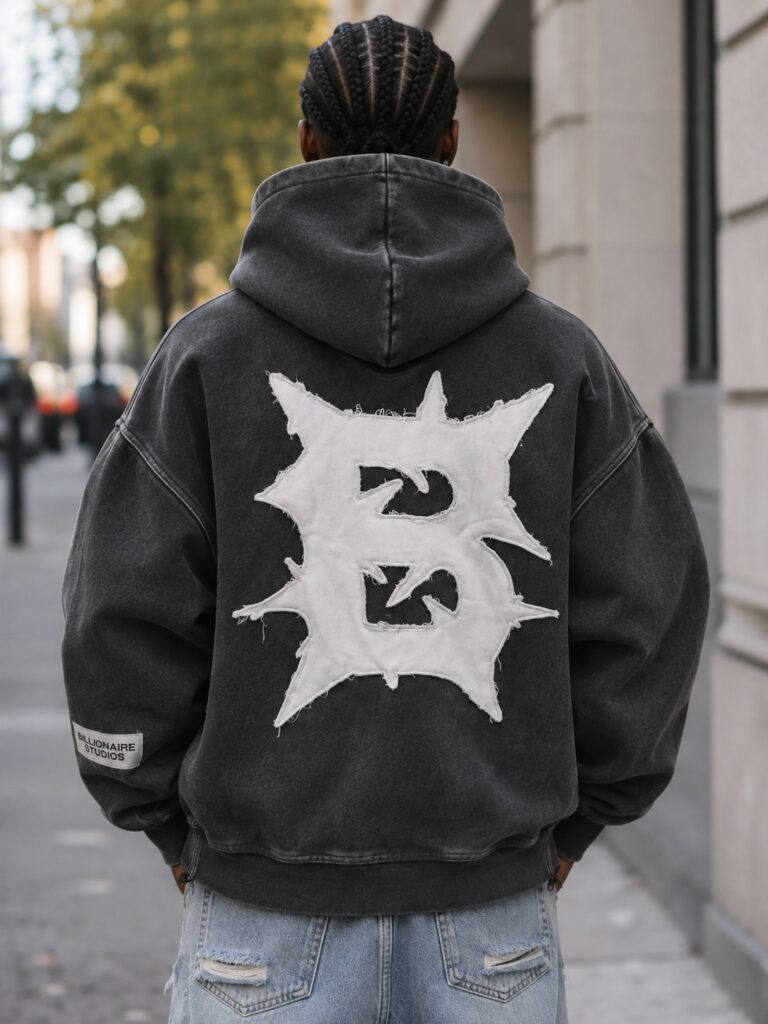
A garment-washed hoodie looks as though it has been worn for years from the first day — softer, slightly faded, with a lived-in character that a standard dyed garment cannot match. That look is created by a finishing step after the hoodie is sewn, not by the fabric alone. This guide explains what garment washing actually does, how distressing is added, and what to specify when you order a washed finish custom.
What garment washing actually is
Garment washing is a finishing process applied to the completed hoodie. Instead of dyeing the yarn or fabric and stopping there, the finished garment is washed — often with enzymes, stone or abrasion — to soften the hand feel and break down the surface colour. The result is a faded, slightly uneven tone and a softer drape. It is a controlled process, not an accident, and it must be specified as part of the order.
Why the washed look sells
A washed finish gives a hoodie character and makes it feel less generic. The colour is softer and easier to wear, the fabric feels broken-in from the start, and each piece has slight variation that reads as individual. For streetwear and vintage-inspired lines, that worn-in quality is often the whole point. Our sweatshirt and hoodie range shows how a finish changes the same base garment.
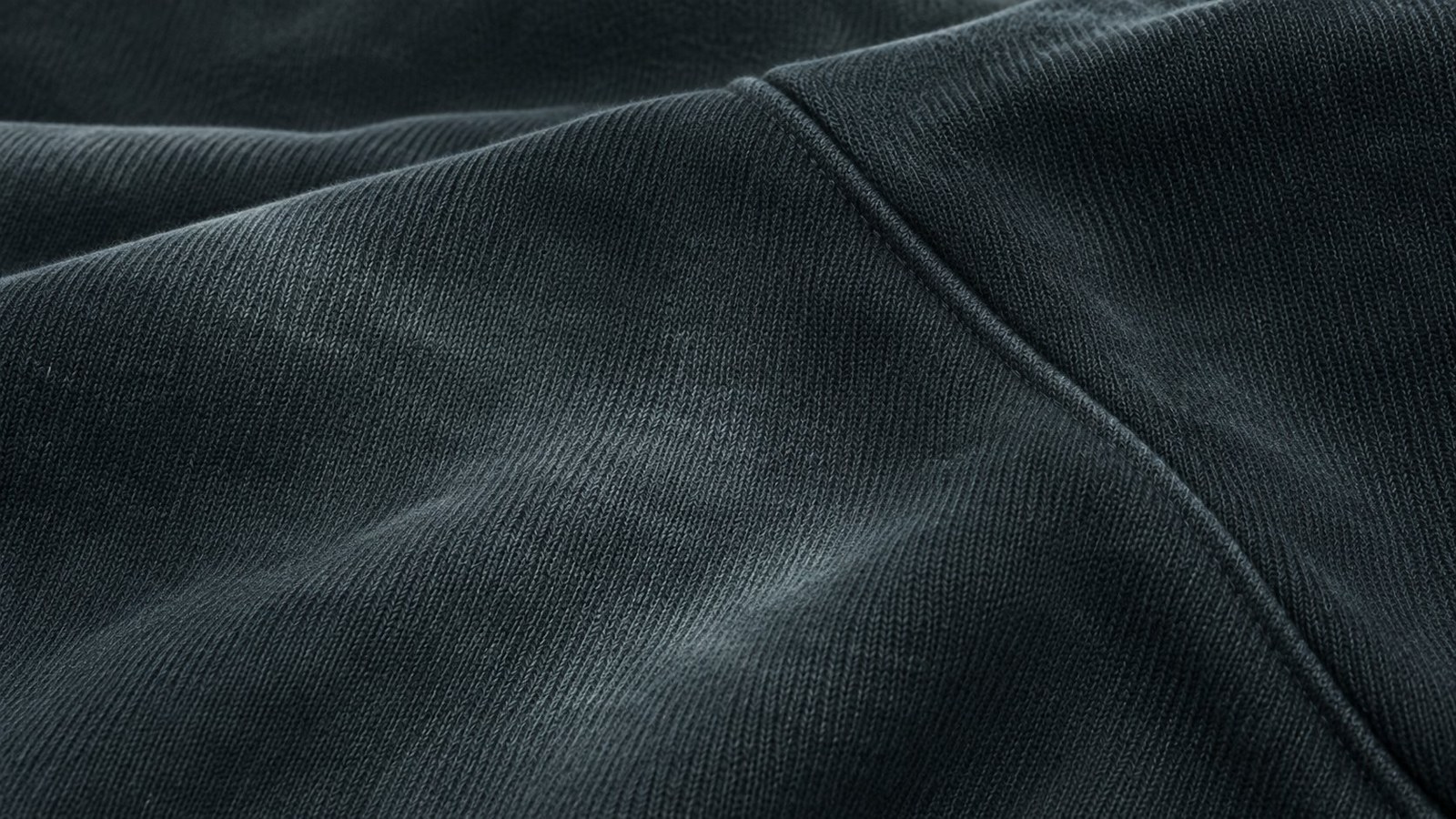
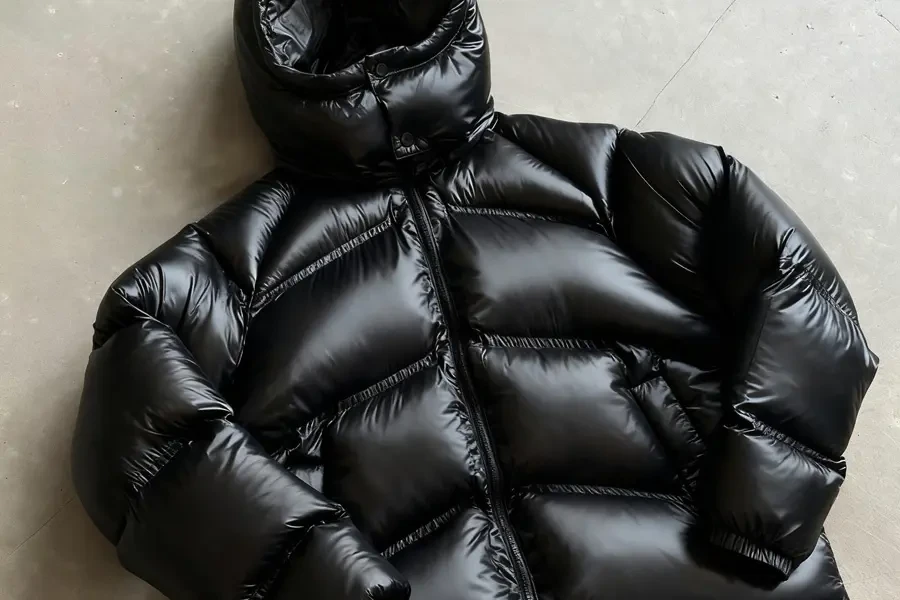
AI-generated illustrative imagery, not an actual photograph. Macro view of washed dark cotton fabric showing the soft, faded surface of a garment wash.
The main wash finishes
Several finishes produce a worn look, and they are not interchangeable. Enzyme wash uses enzymes to soften the surface and reduce pilling, giving a clean faded look. Stone wash tumbles the garment with abrasive stones for a stronger, more irregular fade. Garment dye colours the finished garment rather than the fabric, producing a softer, uneven tone. Each has a different cost, lead time and environmental footprint, so the choice should follow the look you want.
Adding distressing
Distressing takes the worn look further. Small holes, frayed edges, abraded seams and raw-cut details are added by hand or machine after washing. The effect must be controlled — too much distressing looks damaged rather than designed, and placement should be consistent across the size range. Distressing adds manual labour, so it raises the unit cost. Approve the exact placement on a physical sample before bulk.
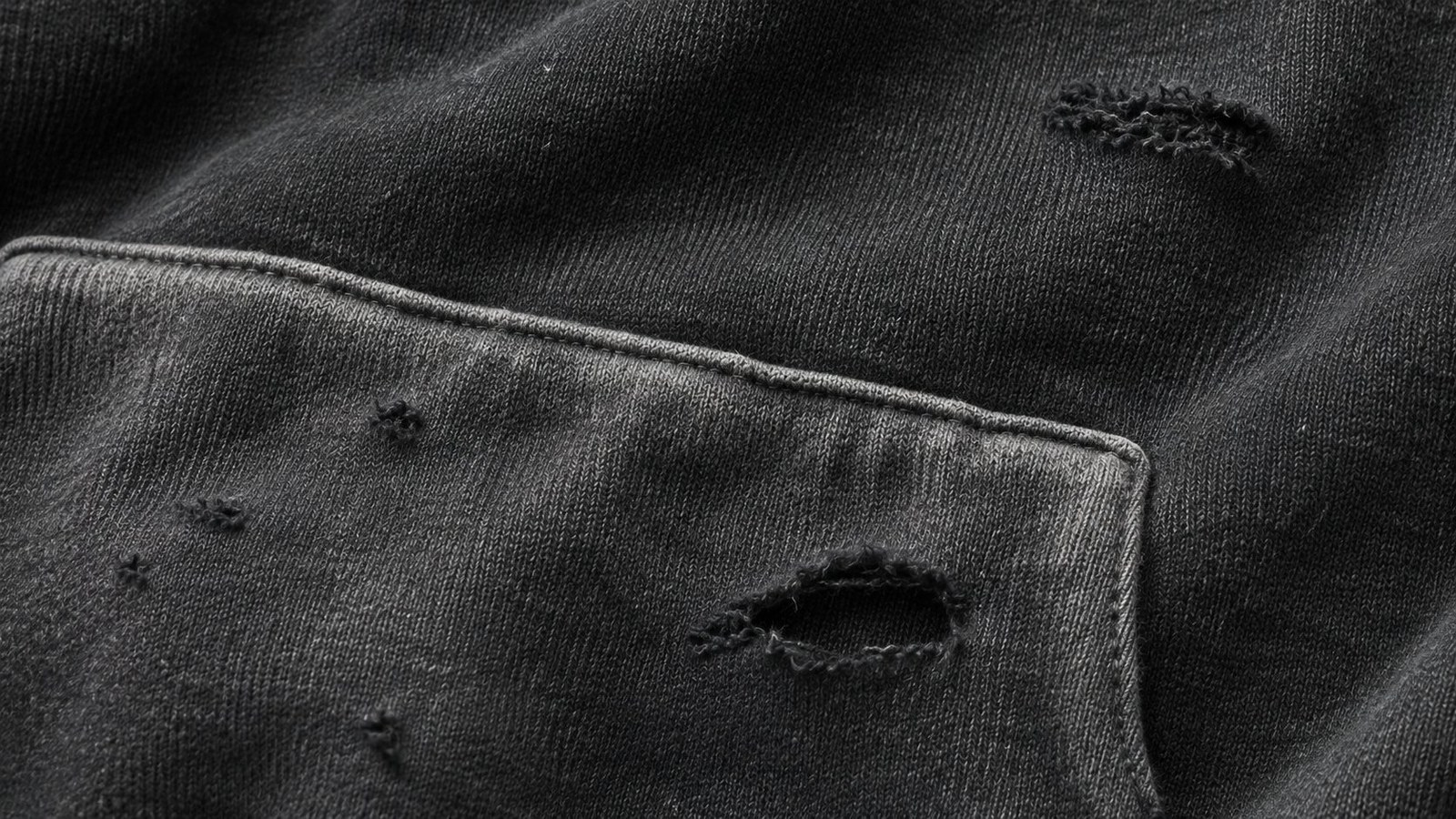
AI-generated illustrative imagery, not an actual photograph. Macro view of distressed dark hoodie fabric with small holes and abraded details.
Washed vs standard dyed fabric
| Aspect | Standard dyed | Garment washed |
|---|---|---|
| Colour | Even, consistent | Soft, slightly faded |
| Hand feel | Firmer, as woven | Soft, broken-in |
| Variation | Minimal between pieces | Slight, intentional |
| Cost | Base | Added finishing step |
Fabric weight and the wash
The base fabric still matters. Our hoodie fabrics are developed in a 380-450 GSM band, specified per project — heavy enough to withstand washing without losing structure. A lighter cloth can be washed, but it may twist or lose shape. The fabric guide explains how different knits respond to finishing.
Decoration on a washed garment
Washing changes how decoration sits on the fabric. Embroidery and prints can be applied before or after the wash, and the order affects the final look — a print applied before washing will fade with the garment, while one applied after stays crisp. Decide the sequence deliberately and confirm it on a sample. Our printing guide covers how finishes interact with decoration.
Specifying a washed finish in your order
Put the finish in writing: wash type, target fade level, whether distressing is included and where it sits, and the decoration sequence. Because washing can shift dimensions and colour, approve a physical sample that has been through the full process. For sweatshirts and crewnecks, sampling is completed within two weeks and bulk production runs 30 days or more, depending on complexity and quantity. Standard MOQ is 300 pieces per style and colour; lower volumes can be discussed. Details are on our MOQ and sampling page.
FAQ
Will every washed hoodie look the same?
No. A slight variation between pieces is part of the look. The base colour and fade level are controlled, but the finished tone is not perfectly uniform.
Does garment washing shrink the hoodie?
Washing can change dimensions, which is why the process is accounted for in the pattern and confirmed on a pre-bulk sample.
Is distressing the same as garment washing?
No. Washing softens and fades the whole garment; distressing adds specific worn details such as holes or frayed edges. They are often combined.
Can you develop a washed finish from a reference?
Yes. Send a sample or photos with notes and we will match the wash and distress level — see our services.
Ready to source?
Tell us the washed look you want and your target quantity to our team. We will prepare a finished sample and quote the program.