A first hoodie order is a balancing act: too many styles and colours pushes unit costs up, too few sizes leaves your best sellers out of stock. Good planning before sampling saves both money and reorder headaches. This guide covers how to choose the style mix, size curve and colour ratios for a first production run.
Start with the style mix
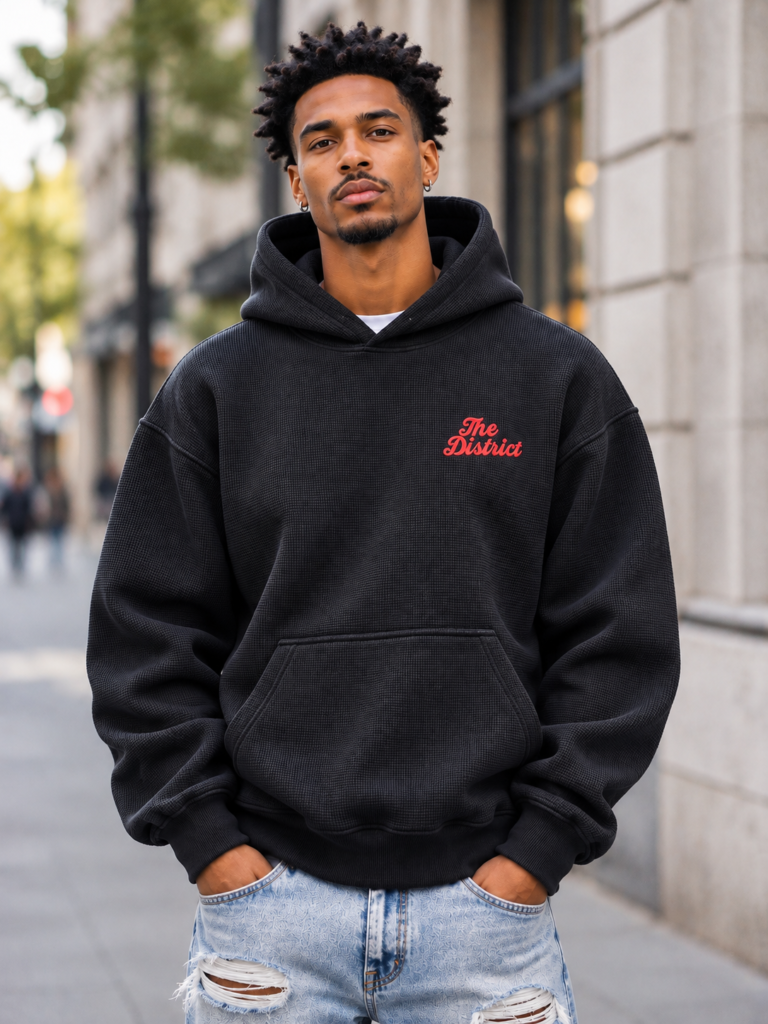
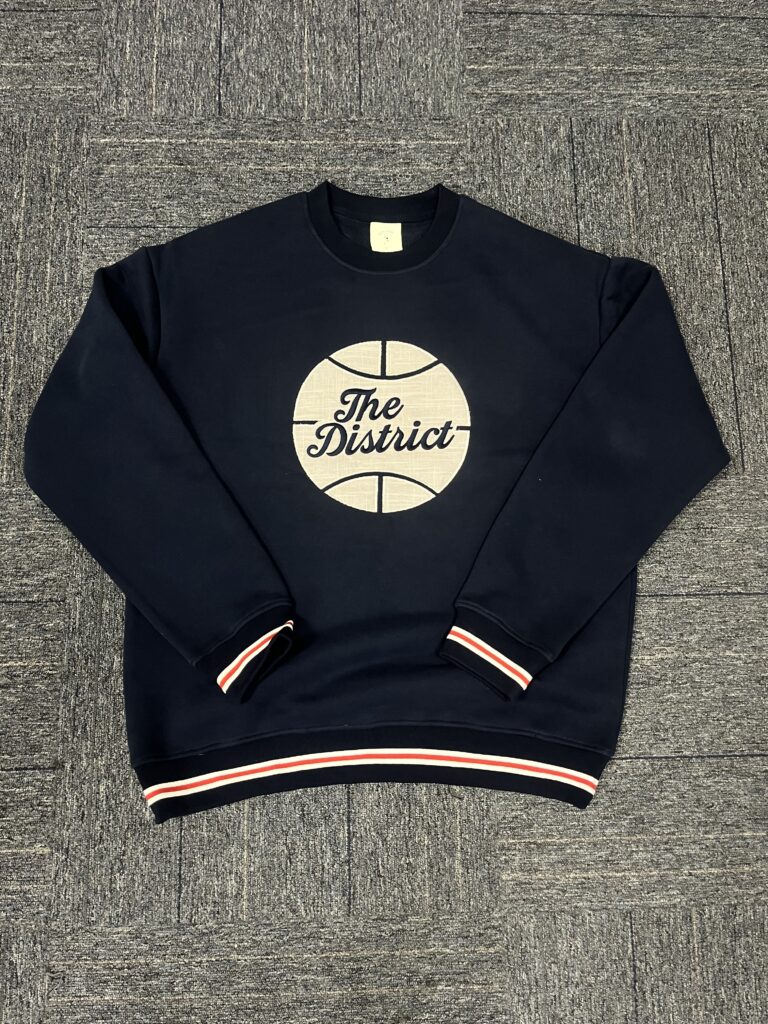
Most new brands begin with one or two silhouettes rather than a full line. A crewneck plus a pullover hoodie covers two seasons and two price points without splitting the order into tiny runs. If your market is streetwear-led, a single heavyweight oversized hoodie in several colours may be the stronger start. The sweatshirt and hoodie range shows the styles we develop most.
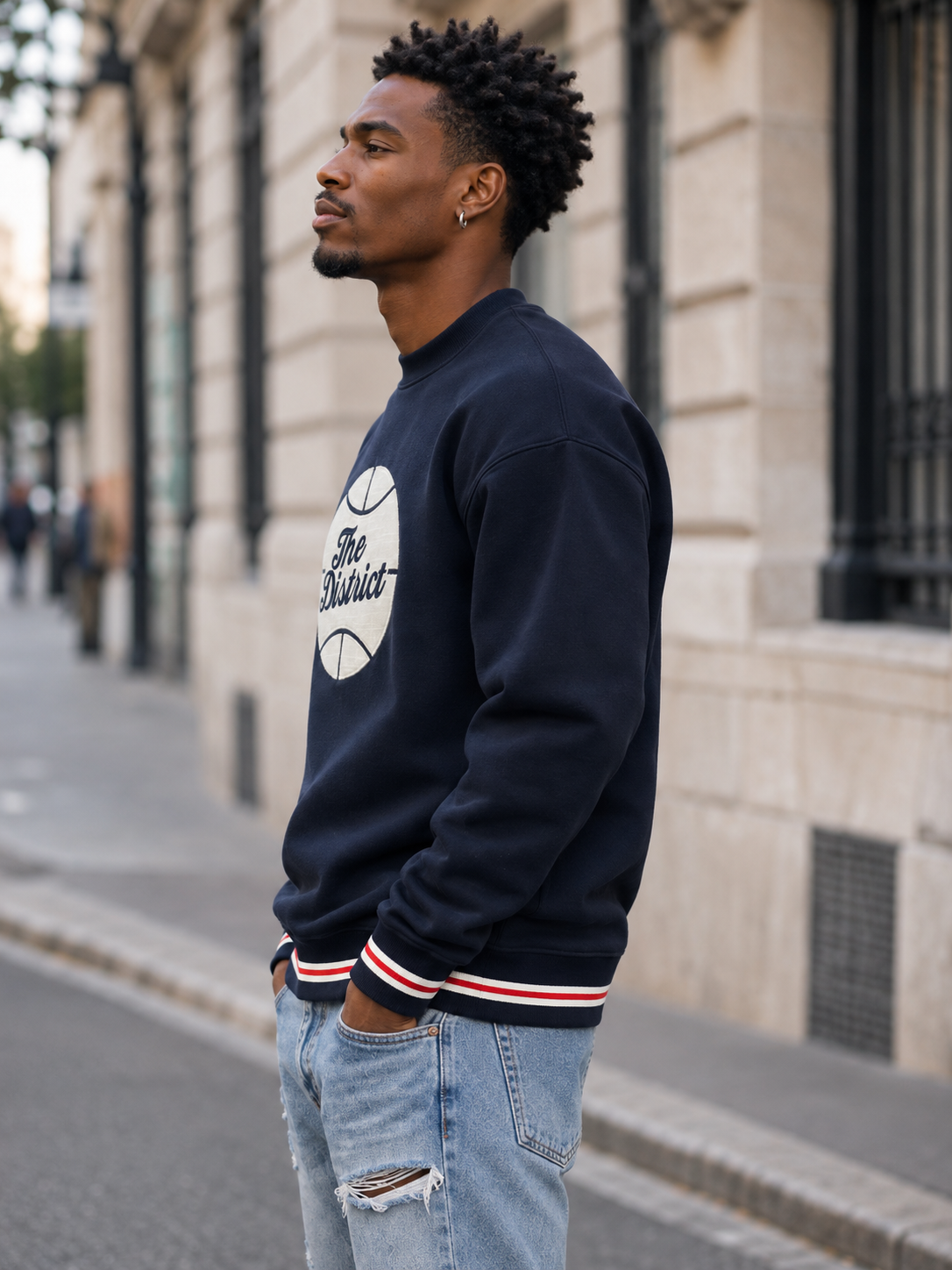
AI-generated illustrative on-model side view of a navy crewneck sweatshirt with a ribbed crew neckline and contrast striped ribbing, street setting
Building a size curve
Size ratios should follow your market, not a generic template. For a unisex streetwear hoodie, a typical starting curve weights M and L most heavily, with smaller shares of S, XL and XXL. Premium or oversized fits often shift demand toward L and XL. If you have pre-orders or a mailing list, use that data; otherwise ask your manufacturer what similar programs have run.
| Size | Indicative share | Note |
|---|---|---|
| S | 10-15% | Lower in oversized programs |
| M | 25-30% | Core size |
| L | 30-35% | Core size |
| XL | 15-20% | Higher in premium fits |
| XXL | 5-10% | Adjust to market |
These shares are a starting discussion point, not a fixed rule — final ratios should reflect your own customer data.
Choosing colour ratios
A safe first run is one core colour in the deepest quantity plus one or two accent colours. Core colours such as black, heather grey and navy move across seasons and age well in inventory. Accent colours keep the range fresh but should be ordered shallower until you see sell-through. Fabric choice matters too — see our fabric guide for how different knits take dye.
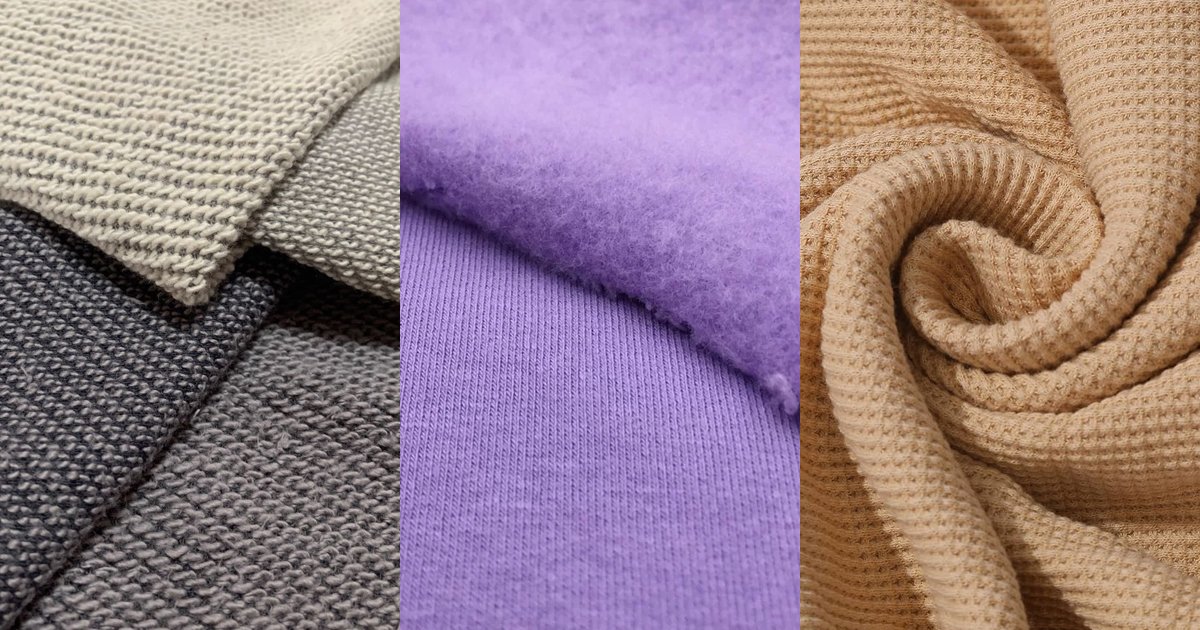
Physical sample photograph: French terry, brushed fleece and waffle knit fabrics laid flat side by side.
Quantity, MOQ and cost
Our standard MOQ is 300 pieces per style and colour, and lower volumes can be discussed. Because MOQ is counted per colour, spreading a first order across six colours means six separate minimums. Concentrating on two or three colours keeps the order inside a sensible budget and simplifies decoration setup.
Sampling before bulk
Approve a physical sample before committing to the full run. For sweatshirts, crewnecks and sweatpants, sampling is completed within two weeks and bulk production runs 30 days or more, depending on complexity and quantity. Use the sample stage to confirm fit, fabric weight, colour and decoration placement — changes after bulk starts are expensive.
A simple first-order framework
- One or two styles, not a full line.
- Two or three colours, one of them core.
- A size curve weighted to M and L, adjusted to your market.
- One decoration style across the whole run to keep setup low.
FAQ
What is the minimum for a first order?
Standard MOQ is 300 pieces per style and colour; lower volumes can be discussed. Fewer colours makes a smaller first run more practical.
Can I split one style across several colours?
Yes, but each colour is counted separately for MOQ and often for decoration setup.
How do I set sizes without sales data?
Start with a conventional unisex curve weighted to M and L, then adjust after the first sell-through.
Can you help with tech packs?
Yes. Send a sketch, reference sample or photo and we will help turn it into a production-ready spec — see our services.
Ready to source?
Tell us your styles, target quantity and market to our team. We will suggest a practical size and colour plan and quote the run.