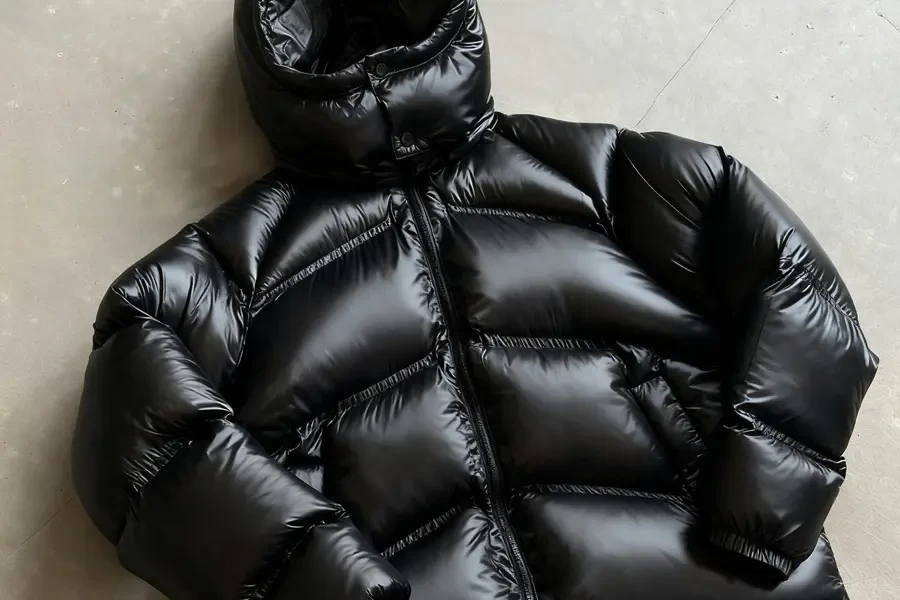
For premium outerwear brands, “down leakage”—the migration of down clusters through fabric pores or stitch lines—is more than a minor annoyance; it is a direct threat to brand reputation. As consumers demand lighter and more breathable puffer jackets, the technical challenge of containing high-fill-power down becomes increasingly complex. At Five Oceans, we solve this through a combination of material science and advanced assembly techniques.
1. Material Science: The 400T Standard
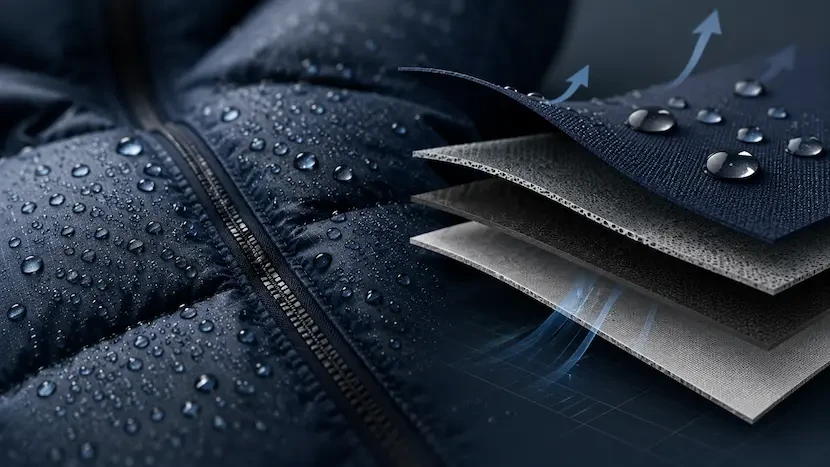
The first line of defense against leakage is the fabric’s construction. We prioritize high-density “Down-Proof” fabrics, typically measured by thread count (T). For lightweight technical puffers, a minimum of 380T to 400T is required to ensure the weave is tight enough to block down plumules while maintaining breathability.
Key Material Specifications:
- Fabric Density: 400T+ Nylon or Polyester Ripstop.
- Cire Finishing: Heat and pressure treatment to flatten fibers and seal microscopic gaps.
- Coating: Ultra-thin PU or silicone coatings for enhanced down-retention in extreme conditions.
2. Precision Engineering in Assembly
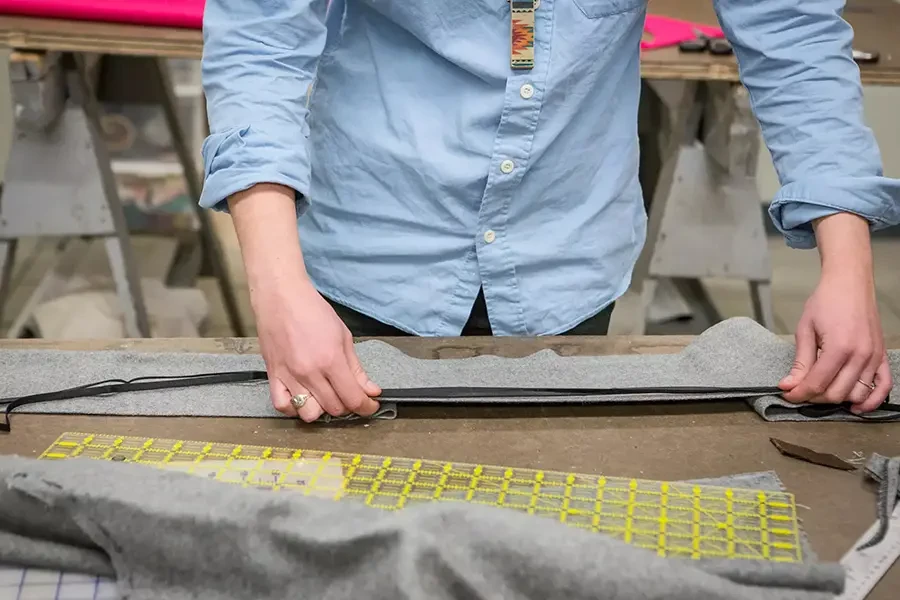
Even the best fabric will fail if the stitching process is flawed. Traditional needles can create large holes that expand under the heat of high-speed sewing, allowing down to escape. Our technical protocol mandates the use of specialized equipment to mitigate this risk.
We utilize #11 Ball-Point Needles, which are designed to push fabric fibers aside rather than piercing them. This preserves the structural integrity of the weave. Additionally, we use Anti-Wicking Threads that expand slightly to fill the needle hole, creating a physical seal against down migration.
3. The Five Oceans Down-Proof Workflow
Our manufacturing process includes a dedicated quality gate for down retention. Below is the horizontal workflow we implement for every technical puffer order:
Down-Proof Production Flowchart
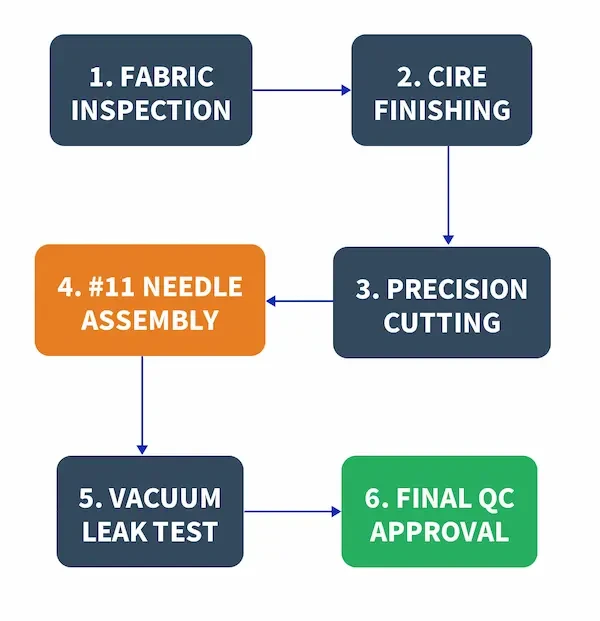
(Note: Diagram shows the progression from raw material inspection to final vacuum testing.)
4. Testing and Validation
Validation is the final step in our engineering process. We subject production samples to “Tumble Tests” and “Vacuum Stress Tests” to simulate years of consumer wear. This ensures that the interaction between the down, the inner lining, and the outer shell remains stable under compression and movement.
Technical References
- ASTM International. Standard Test Method for Down Migration Through Fabrics (D6760). Available at: astm.org
- Journal of Textile Science & Fashion Technology (2021). Analysis of Down Leakage in Winter Clothing. Available at: irispublishers.com
- International Down and Feather Bureau (IDFB). Testing Standards for Down-Proof Properties. Available at: idfb.net