Print and decoration choices change the look, the hand feel and the cost of a custom hoodie far more than most buyers expect. Three methods dominate our programs: screen printing, digital (DTG) printing and rhinestone transfer. Each suits a different artwork, order size and budget. This guide explains where each method works, where it falls short, and how to choose before you commit to sampling.
Screen printing: the workhorse for volume
Screen printing pushes ink through a mesh screen onto the fabric, one colour and one screen per layer. It is the most cost-effective method at scale: the setup cost is spread across the run, so the per-piece price falls sharply as quantity rises. The inks sit on top of the fabric and give strong, opaque colour that holds up well to washing. The trade-offs are setup cost for each colour, limits on fine gradient detail, and the need to align layers on every garment.
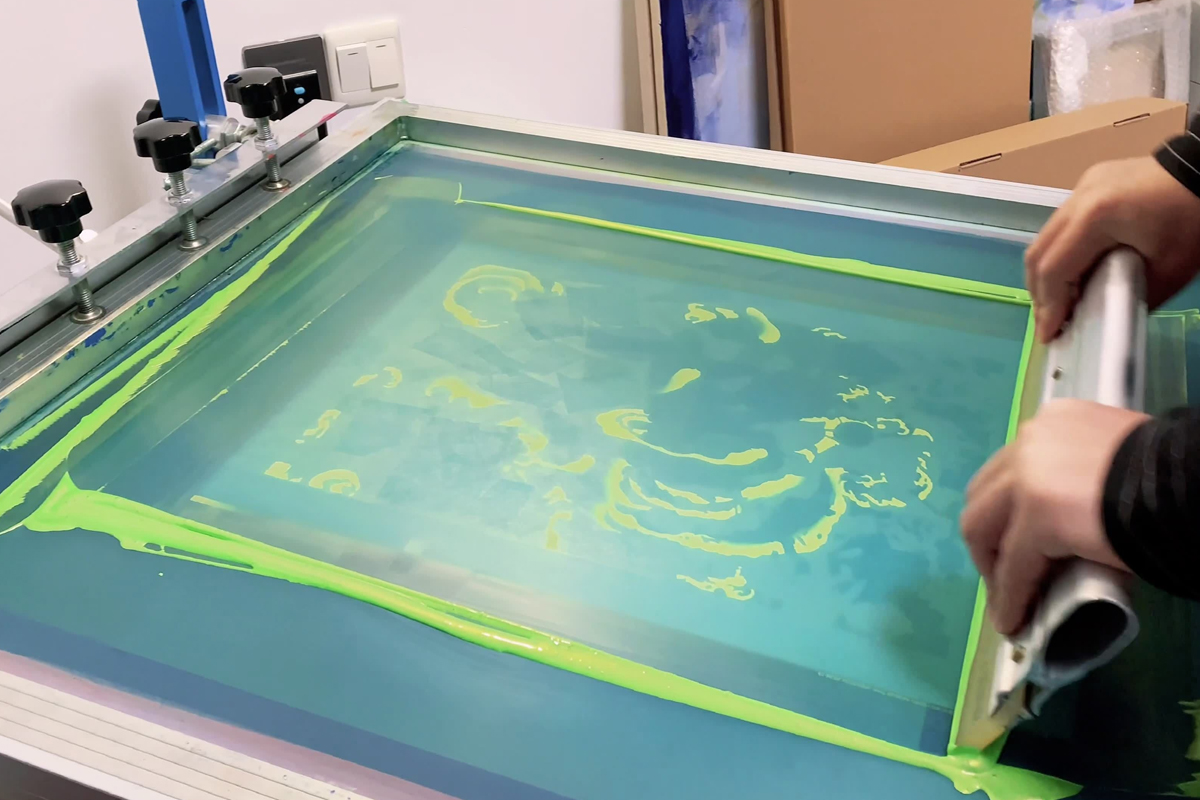
Physical sample photograph: screen printing frame with green emulsion and a squeegee on a fabric press.
Digital (DTG) printing: detail without setup
Direct-to-garment printing applies ink from a digital printer straight onto the fabric, much like a paper printer. There are no screens and no per-colour setup, so it is ideal for small runs, one-off samples and artwork with gradients or photographic detail. The ink soaks into the fibres, giving a soft hand feel with no raised layer. It is slower and more expensive per piece at volume, and works best on cotton-rich fabrics. We covered how fabric choice affects print results in our hoodie fabric guide.
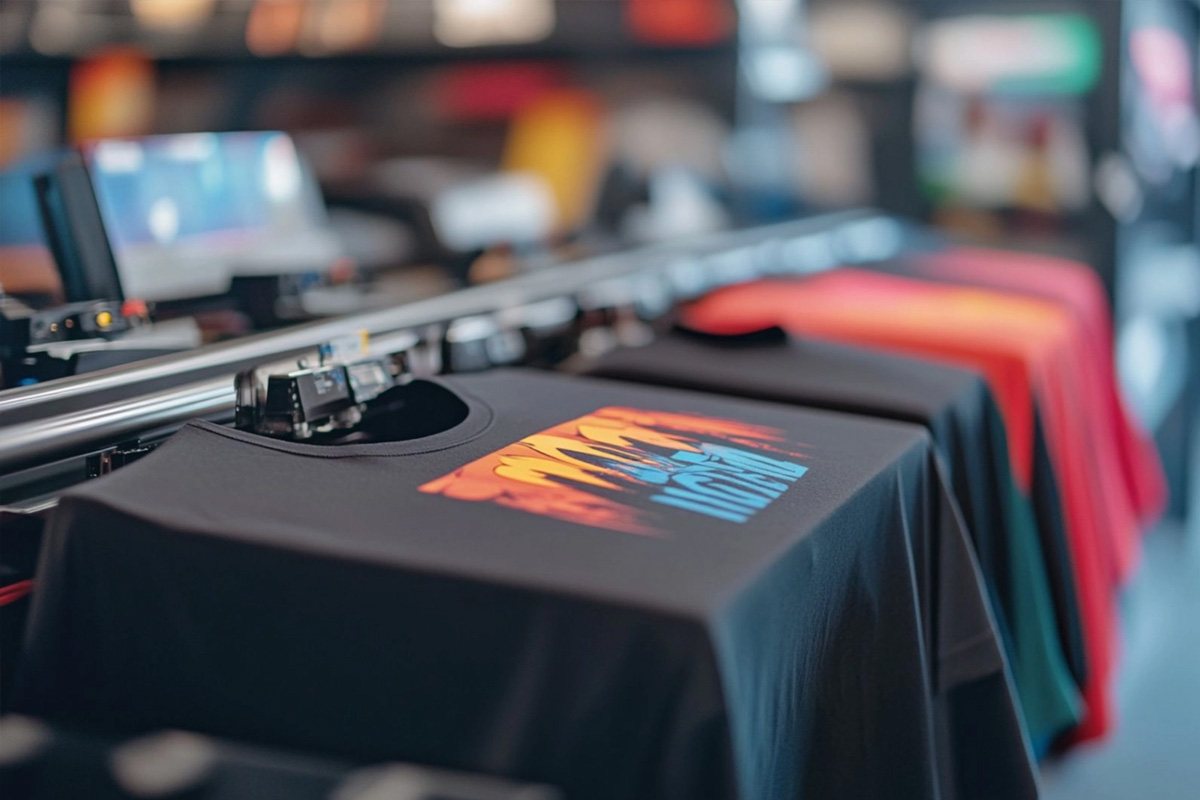
AI-generated illustrative imagery, not an actual photograph: direct-to-garment printing on a black T-shirt.
Rhinestone transfer: shine and texture
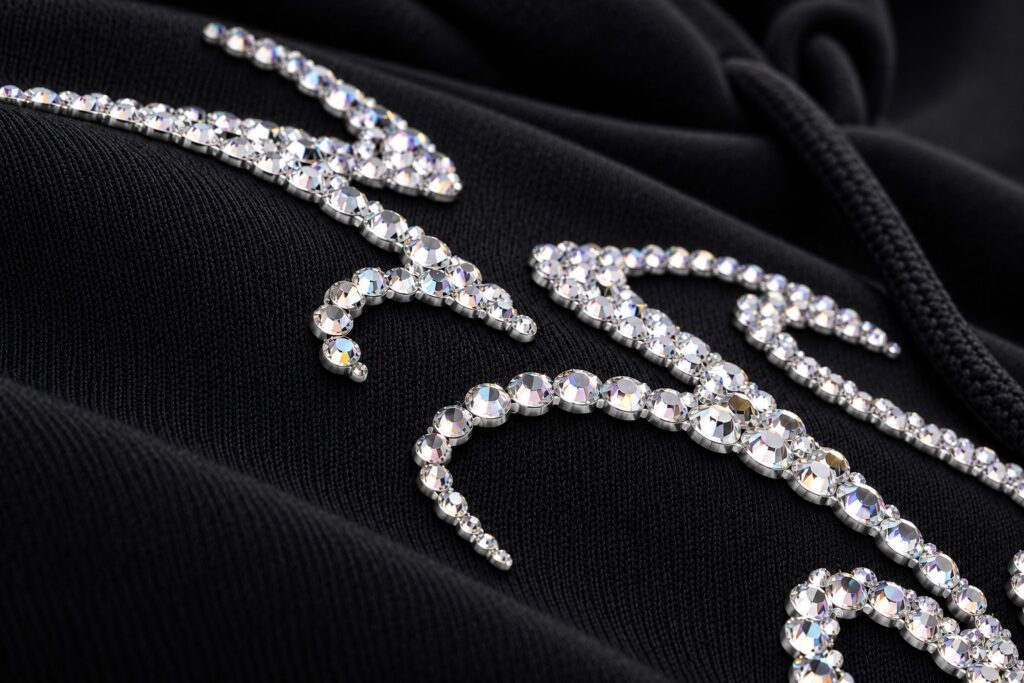
Rhinestone decoration applies faceted crystals to the garment with a heat-press transfer. It gives a reflective, premium look that ink cannot reproduce, and works well on dark hoodies for script, logos and line art. Crystals are set individually or in a pre-made transfer, so cost scales with the number of stones and the complexity of the layout. The main care consideration is heat and abrasion: rhinestones should be pressed firmly and the garment washed inside out.
High-frequency print: a raised rubber effect
For programs that want a tactile, raised mark without embroidery, high-frequency print builds up layers of ink into a smooth rubbery relief. It is less common than the three methods above but useful for modern, minimal graphics. We can propose it where the design calls for texture on a budget.
Comparing the three main methods
| Method | Best for | Hand feel | At volume |
|---|---|---|---|
| Screen printing | Large runs, bold flat colours | Slightly raised, opaque | Most economical |
| Digital (DTG) | Small runs, detailed artwork | Soft, absorbed | Higher per piece |
| Rhinestone | Logos, script, premium accents | Raised, reflective | Cost per stone |
A real production example is the back print on this black waffle knit pullover hoodie. See the full sweatshirt and hoodie range for more decorated pieces.
Choosing by order size
- Samples and short runs (tens of pieces): digital printing avoids screen setup.
- Medium to large runs (hundreds): screen printing gives the lowest unit cost.
- Premium accents on any quantity: rhinestone on its own or combined with a print.
- Not sure? We can produce a small sample of each method on the same blank so you can compare before the bulk order.
Sampling, MOQ and lead times
For sweatshirts, crewnecks and sweatpants, sampling is completed within two weeks and bulk production runs 30 days or more, depending on style complexity and order quantity. Standard MOQ is 300 pieces per style and colour; lower volumes can be discussed. Decoration cost is quoted separately from the garment and depends on artwork and quantity.
FAQ
Which print method lasts the longest?
Screen-printed plastisol and well-cured DTG inks both wash well when cared for correctly. Rhinestones need gentler washing — inside out, low heat — to keep the crystals firmly set.
Can I combine print and rhinestone on one hoodie?
Yes. A common program pairs a screen-printed back graphic with a small rhinestone or embroidered chest logo.
Do you need separate artwork for each method?
Yes. Screen printing needs separated colour layers; DTG needs a high-resolution flat file; rhinestone needs a layout that translates into individual stones. We confirm the file at the sample stage.
What is the minimum order for digital printing?
Digital has no screen setup, so it suits the smallest runs. The standard program MOQ is 300 pieces per style and colour, but lower volumes can be discussed.
Can you print on the fabric we choose?
Most cotton-rich hoodie fabrics print well. We confirm the method against the fabric at sampling — see our fabric guide for the options.
Ready to source?
Send your artwork, reference sample or product photo to our team. We will recommend the right print method, prepare a sample and quote the decoration per your order quantity.